
Master Solutions Blog
Master Solutions has been serving the Naperville area since 1996, providing IT Support such as technical helpdesk support, computer support, and consulting to small and medium-sized businesses.

As an IT professional, my primary goal is keeping company systems running smoothly so employees can work without interruption. Three essential factors determine the reliability and safety of business technology: proactive IT support, strong cybersecurity, and minimized downtime.
Let’s take a look at the benefits of each.
0 Comments

Small delays throughout the workday aggregate into hours of lost productivity. Constant tab-switching, hunting for copied text, and managing chaotic screens slow down your staff. You do not need expensive new software to fix this. Windows already includes native features built to streamline your daily workflow.
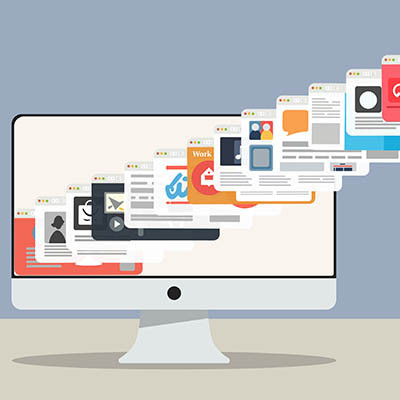
Which scenario sounds more familiar to you: you open a Google Chrome tab and sigh as you then have to navigate through the list of predetermined options it presents, or you open a Google Chrome tab with confidence that you’ll know exactly what will appear?
This is the difference between sticking with Chrome’s often-distracting default settings and taking a few minutes to customize how your new tabs behave. Let’s talk about how to make these customizations and take control of one of your most foundational workplace tools.

Daily operations rely heavily on technology, but subtle oversights in hardware management and security protocols quietly create severe operational risks. Identifying these routine gaps allows your organization to safeguard critical data, empower employees, and extract maximum value from existing tools without unnecessary spend.

Imagine walking into a bustling workplace, watching the team lean over their keyboards, completely absorbed in their screens. From the outside, it looks like a symphony of pure, unadulterated productivity, but if you pull back the curtain, you might find they are actually trapped in an invisible operational quicksand.
When your team spends hours sorting through minutiae, they aren't moving your business forward. They are simply managing their inbox—an administrative tax that stalls your ability to scale.

Many IT consultants like to drop massive, terrifying global statistics to try to get business owners to take data backup and disaster recovery seriously. You have probably seen reports claiming that the average network outage costs thousands of dollars per minute.
If you run a local business with 15 or 30 employees, a global enterprise statistic like that does not mean a thing to you. It feels generic, irrelevant, and like a high-pressure sales tactic.

Real productivity comes down to removing the digital friction that constantly disrupts the workday. When a company’s everyday computers and software work the right way, employees can finish a lot more work without getting stressed out or frustrated. Maintaining high operational efficiency requires a deliberate look at how systems are configured, deployed, and managed across the entire organization.

I was sitting with a client the other day, and I watched him carefully move his mouse up to the top left of his screen, click "Edit," and scroll down to "Copy." Then he navigated over to a new document, clicked "Edit" again, and hit "Paste."
It took him about ten seconds. When I showed him how to do the exact same thing in less than a second without ever taking his hands off the keyboard, he looked at me like I had just performed magic.

Logic might tell us that new and better tools will help us grow, but beware… in practice, adding new applications into a business workflow can often have the opposite impact. Instead of reaching new levels of productivity, your team is waylaid by additional notifications, obstructive updates, and expanding, fragmented work processes. It is, in a word, exhausting.
This mental tiredness is known as tech fatigue, and its impacts permeate your entire business. Let’s talk about how these impacts manifest and what can be done about them.

I had a conversation with a client the other day—we were reviewing his quarterly IT strategy, and when I brought up artificial intelligence, he waved me off. He told me his company wasn’t "doing the AI thing yet," and he was absolutely certain his staff wasn't using it.
Out of curiosity, we took a quick peek at his network traffic logs.

When was the last time you consulted your team members about a planned technology change or investment? Never, right? Instead, you look at the metrics, balance the various return on investment figures, and determine whether to invest in a new platform.
However, a mere three months later, your entire team has largely abandoned the new platform and reverted to how things were done before. As frustrating as this situation is, it helps reveal a key issue: You and your team have different perspectives and priorities.

In my years in this industry, I’ve noticed a recurring pattern in the cloud landscape: prices rarely, if ever, trend downward.
Microsoft recently rolled out another series of price adjustments across its core business suite. I understand the frustration; it often feels like a subscription tax that eats into your margins without offering a visible change to your daily workflow.
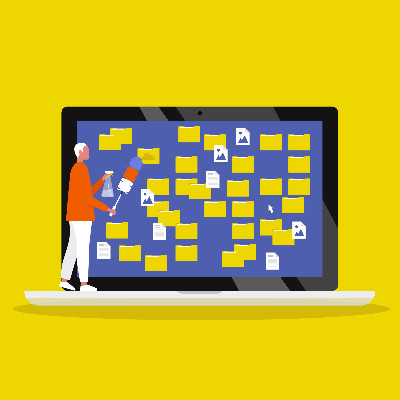
The average office worker spends nearly 20% of their week just looking for information or dealing with digital interruptions. Between messy folder structures and the constant "ping" of chat messages, it’s easy to feel like you’re busy without actually being productive.
Small changes in how you handle your digital workspace can save hours of frustration every month. Let’s explore three such changes that you and your team could feasibly make today.
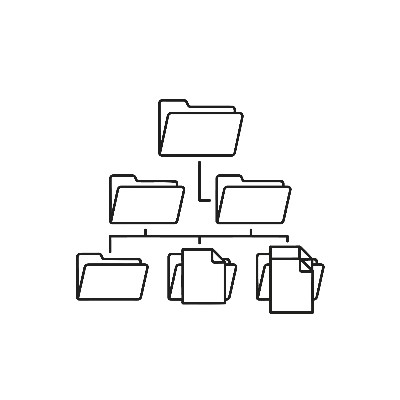
Most businesses are sitting on a mountain of data, but they’re treating it like a junk drawer. Adding a fancier drawer—like some five-figure AI-powered document management suite—doesn't help if you’re still just tossing stuff in there.
You probably don't need more software. You need a system. Before you go spending money on a solution for a headache that shouldn't exist in the first place, you need to look at how you handle the information you already have.
Is your team’s desktop a graveyard of productivity apps that actually kill productivity? It's a common trap: business owners often mistake a growing list of software subscriptions for progress. In reality, this app creep usually results in redundant costs and a frustrated workforce.
To scale effectively, you don’t need more tools. You need to master the ones you already have.

If you feel like your to-do list keeps growing every day, you aren’t alone. For many entrepreneurs, the day feels like a losing battle against the clock, switching from sales spreadsheets to marketing plans until your brain feels like it has too many tabs open.

The old ways of working aren't just outdated, they’re a liability. As we navigate the mid-2020s, the “hustle harder” mantra has been replaced by a more sophisticated approach: algorithmic efficiency. If you’re still manually wrestling with your inbox or playing calendar Tetris, you’re running legacy software on modern hardware. This month, we thought we’d give you four tips to maximize your efficiency.

If you’re an SMB owner, you probably think your biggest overhead is rent, payroll, or inventory. You’re wrong.
Your biggest hidden expense is the friction tax: the literal dollars leaking out of your bank account every time a 12-person email thread lands in an inbox. Most business owners treat IT like a utility, but if your team is still collaborating via CC’d emails and messy threads, you aren’t running a modern business. You’re running a digital archaeological dig.

We’re sure that even your most talented employees have tasks on their plate that make them feel like expensive data-entry clerks. This is known as the “tedium tax,” and it can have a very real impact on small businesses (especially when employees wear multiple hats). When you have multiple tools that don’t speak well with each other, and you’re forced to resort to manual data entry, your team starts to act like a “human bridge,” connecting these isolated apps themselves—and wasting a lot of time in the process.

Ubiquitous technology, used correctly, makes your business a powerhouse. Used poorly, it turns your company into a ghost ship, technically efficient but completely disconnected from your customers.
Some businesses are currently racing to replace their staff with AI. While they might save money upfront, they are often building a wall between themselves and the people they serve. Here is why keeping a human in the loop is actually your greatest competitive advantage.
Mobile? Grab this Article